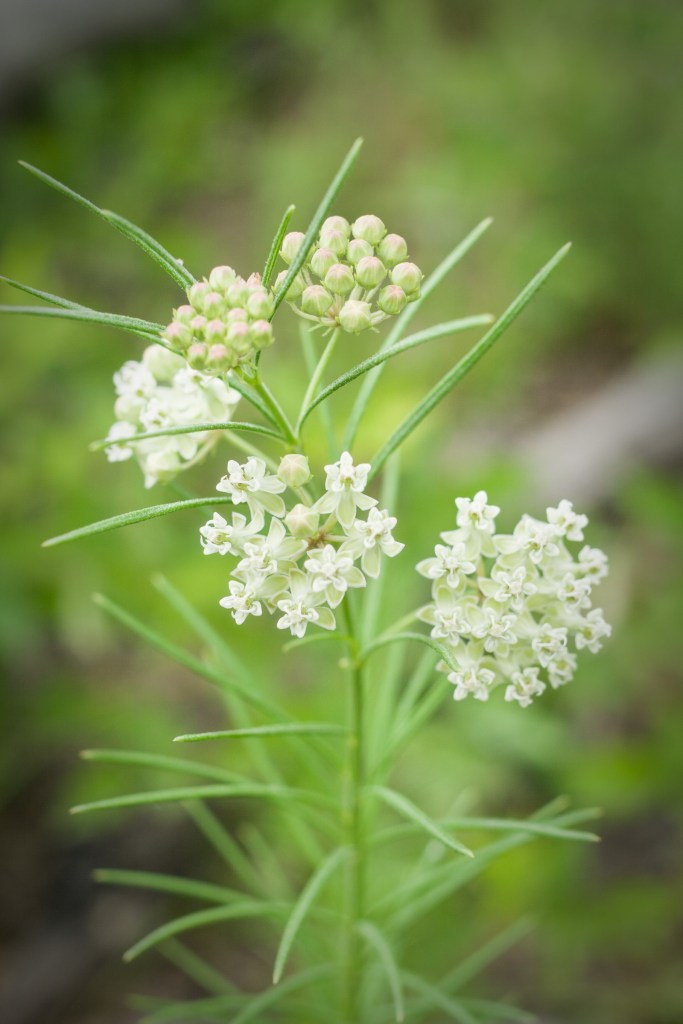
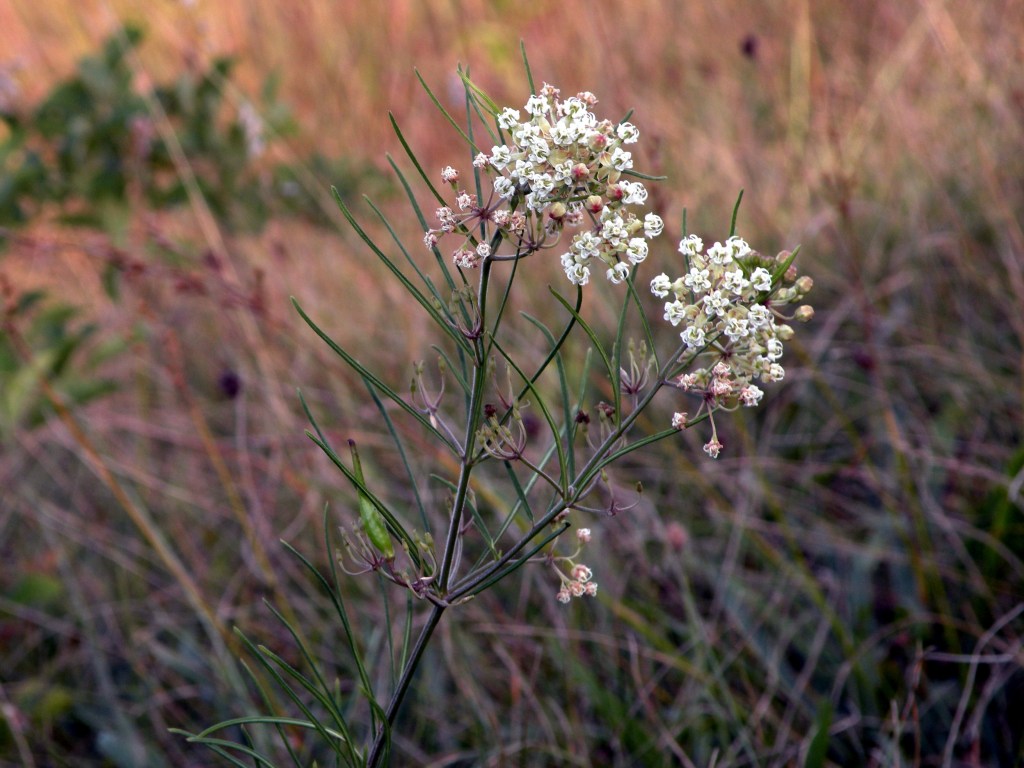
Whorled milkweed has slender, delicate looking leaves that appear in whorls, giving this milkweed its name. It continues blooming relatively late into the fall compared to other milkweed species, making this an important food source for late migrating monarchs. It is drought tolerant and resistant to rabbits and deer. Like all milkweeds, it is the larval host for monarch butterflies, but the blooms are loved by all types of pollinators as well as hummingbirds.

Care requirements:
Light requirements: Full Sun-Part Shade
Water requirements: Low
Soil requirements: Dry
Bloom time: June-September
Bloom color: White
Height: 3 feet
Width: 1 foot
USDA Zone: 4-9
Larval host: Monarch butterfly
Other notes: Whorled milkweed prefers sandy or gravelly well-drained soils. While it is sometimes considered an aggressive spreader, it does not compete well with taller, more dominant plants. It spreads by both rhizomes and seeds and will eventually form colonies. Flowers best in full sun and is considered resistant to deer, rabbit, and drought.
Emily’s notes: This is my favorite milkweed and I currently have around 10 plants in my garden. It is definitely an enthusiastic spreader. I already had new plants popping up a few months after planting my first milkweed. I have it growing in both sandy soil, sandy loam, and loam soil and in both full sun and part sun sites. It definitely grows best in the sandy soil with as much sun as possible, though it seems to grow just fine in all of the sites.
Do you have whorled milkweed growing in your garden? Do you have any tips or tricks for growing it you would like to share? Do you know of any Southeastern nurseries that regularly stock it? Let us know in the comments!


Leave a Reply