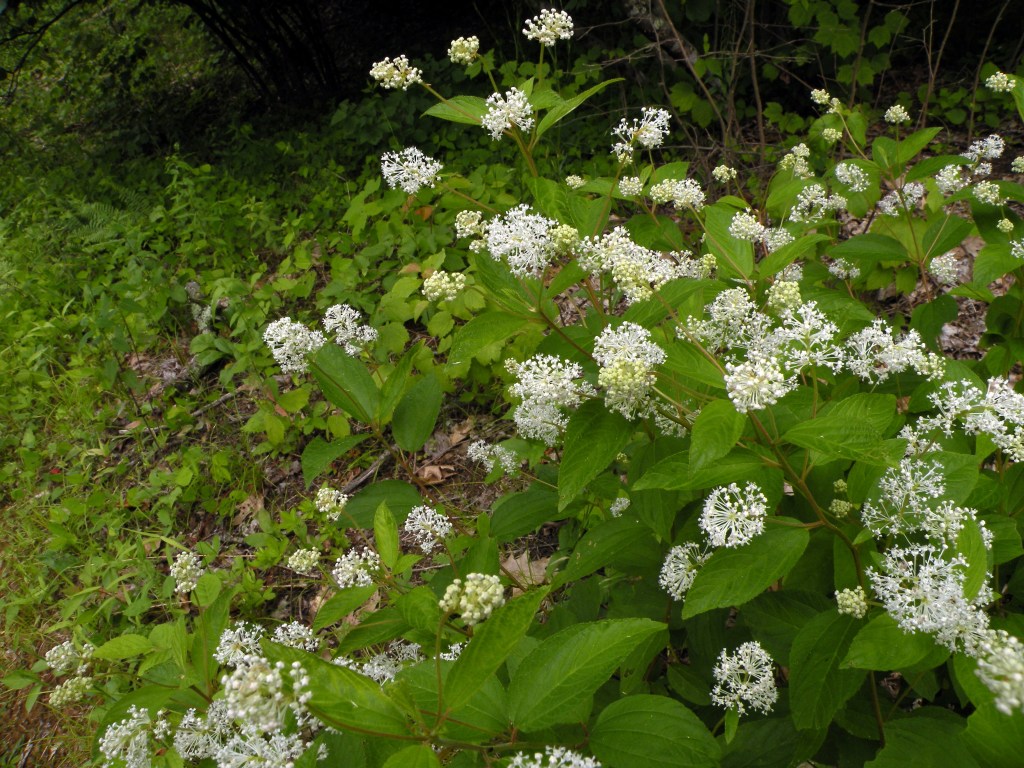
New Jersey Tea gets its name from the fact that its leaves were used as a tea substitute during the Revolutionary War. It is a tough, low-growing shrub that has a deep taproot, meaning it is highly resistant to drought and even recovers well after fire. Its flowers are popular with butterflies, bees, and hummingbirds, and the seeds are a popular food source for songbirds.

Care requirements:
Light requirements: Full Sun-Part Shade
Water requirements: Low-Medium
Soil requirements: Dry-Medium
Bloom time: May-July
Bloom color: White
Height: 3-4 feet
Width: 3-5 feet
USDA Zone: 4-8
Larval host: Spring Azure, Summer Azure, Mottled Duskywing butterflies
Other notes: New Jersey Tea grows best in sandy loam or rocky soils with good drainage. It does not transplant well due to the deep roots. It flowers on new growth so make sure to prune it very early in the season or immediately after flowering for the next year. New Jersey Tea may be slow to bloom when young as it devotes significant energy to developing roots in the first few years. It is more striking when grouped in masses. May need protection when young as the foliage is popular with deer and rabbits.
Do you have New Jersey Tea growing in your garden? Do you have any tips or tricks for growing it you would like to share? Do you know of any Southeastern nurseries that regularly stock it? Let us know in the comments!


 Southeastern Native Plants
Leave a reply to 17 Drought Tolerant Plants for Spring Blooms – Southeastern Native Plants Cancel reply