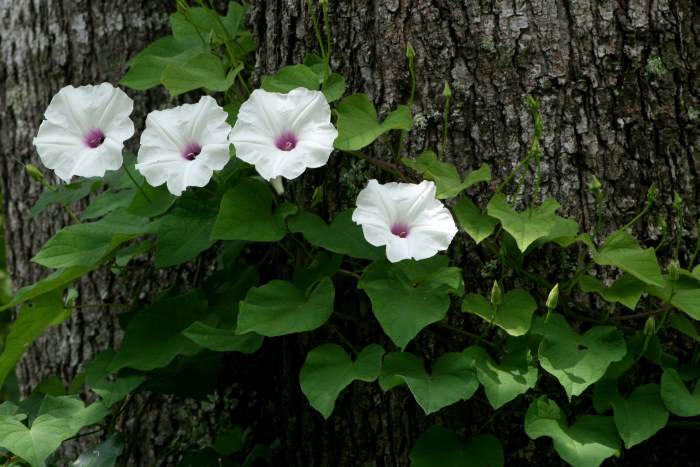
This plant gets its name from the fact that the tuber-like roots are edible and similar to potatoes. The tubers can become quite large, with some weighing 20 lbs or more, leading to its other common name: Man-of-the-Earth vine. These large tubers also mean Wild Potato Vine has very good drought resistance. This is a great native substitute for non-native morning glories, but like most morning glories, it spreads aggressively and can be difficult to eradicate once established. The flowers are popular with bees and hummingbirds.
Care requirements:
Light requirements: Full Sun-Part Shade
Water requirements: Medium
Soil requirements: Medium-Moist, well-drained
Bloom time: June-September
Bloom color: White, purple
Height: 15-30 feet
Width: 3-6 feet
USDA Zone: 6-9
Other notes: Wild Potato Vine is slow growing during the first few years of its life and will take a few years to bloom when grown from seed. Tubers should be cooked before consuming. Large tubers are very bitter tasting so the roots are best consumed when young (around the size of a carrot). Wild Potato Vine cannot self-pollinate, so you will need at least 2 genetically different plants to set seed. When not provide with something to climb, this vine will sprawl along the ground and become a ground cover.
Emily’s notes: I’m currently trying to grow Wild Potato Vine from seed. While some sources report seeds will sprout without stratification, I have not had any luck with that. Most places say the seeds need at least 30 days cold moist stratification.
Do you have Wild Potato Vine growing in your garden? Do you have any tips or tricks for growing it you would like to share? Do you know of any Southeastern nurseries that regularly stock it? Let us know in the comments!

 Southeastern Native Plants
Leave a comment