This post contains Amazon Affiliate Links. When you click on a link in this post and then purchase the linked product, I receive a small commission. This helps me keep the lights on around here so I can keep spreading the word about native plants!
Last year, I redid our front flower bed with native plants, and the labor of trying to keep it weed-free without using herbicides (aka getting on my knees and pulling up everything by hand!) has been nothing short of overwhelming. This year, rather than focus on creating another flower bed and adding even more to my plate, I decided to focus on adding some keystone species for butterflies to my yard.
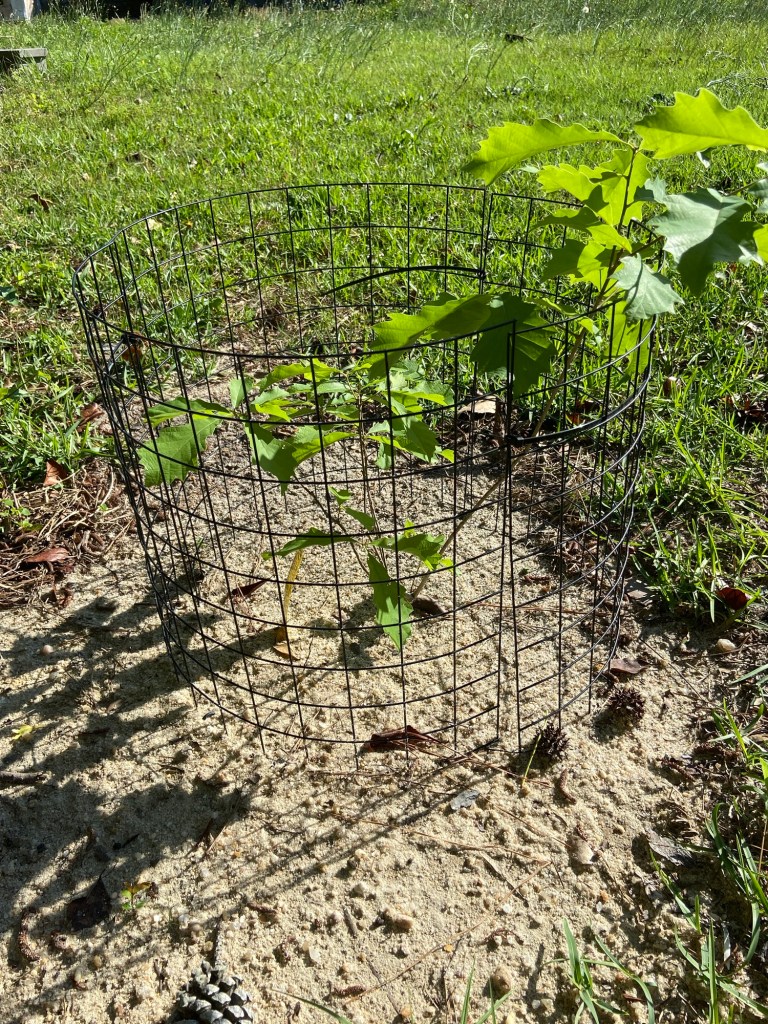
Where I live, the top keystone species for butterflies include oak, plum/cherry, maple, willow, and birch trees among many more. I’m only working with about a third of an acre landscape wise, so I chose 2 dwarf keystone species to add to my yard: Dwarf Chinkapin Oak (Quercus prinoides) and Chalk Maple (Acer leucoderme), as well as a host plant for giant swallowtails: Wafer Ash (Ptelea trifoliata). I plan to add a few more species in the coming years but I really wanted to make sure I was able to devote all my attention this year to keeping these trees alive while my flower bed becomes established.
This led me to purchasing this 5 pack of plant protecting cages from Amazon. Now, you don’t need plant cages to grow trees, but I’ve had issues in the past with squirrels chewing on my plants. The first year we lived in our house, I bought a witch hazel tree and squirrels chewed it right in half! We also have a dog who doesn’t quite understand which plants are okay to walk on and which ones aren’t, so I didn’t want to risk him damaging my plants either. Plant cages seemed like the easiest way to keep them safe.

I chose these cages because I really wanted something metal, rather than plastic, and I wanted something tall and wide. These plant cages come in 2 different sizes: 5″ diameter and 13″ diameter. I opted for the 13″ diameter to give my trees ample room to extend their branches. To achieve the 13″ diameter, the cages come in 3 pieces that you zip tie together and hold down with metal stakes. These are convenient because you can combine multiple cages to either make the diameter wider, or make the cages taller. In my case, I did wind up stacking 2 since my maple tree is so tall, but for my other 2 trees, I only needed one each.
These are fairly easy to assemble but I definitely think they would be easier with 2 people so you could have someone to hold the individual metal pieces and someone to add the zip ties. The individual pieces are not exactly a perfect circle, which I felt made them a little difficult to fit together, but I was still able to assemble them in under a minute. The exception was trying to stack a cage on top of another one. You definitely need 2 people for that. I managed to do it by myself but it was a constant struggle to get the pieces to fit together in a circle and not accidentally break one of my tree’s branches. I think if you were putting these around a taller tree that may not have such low branches, it wouldn’t be an issue.
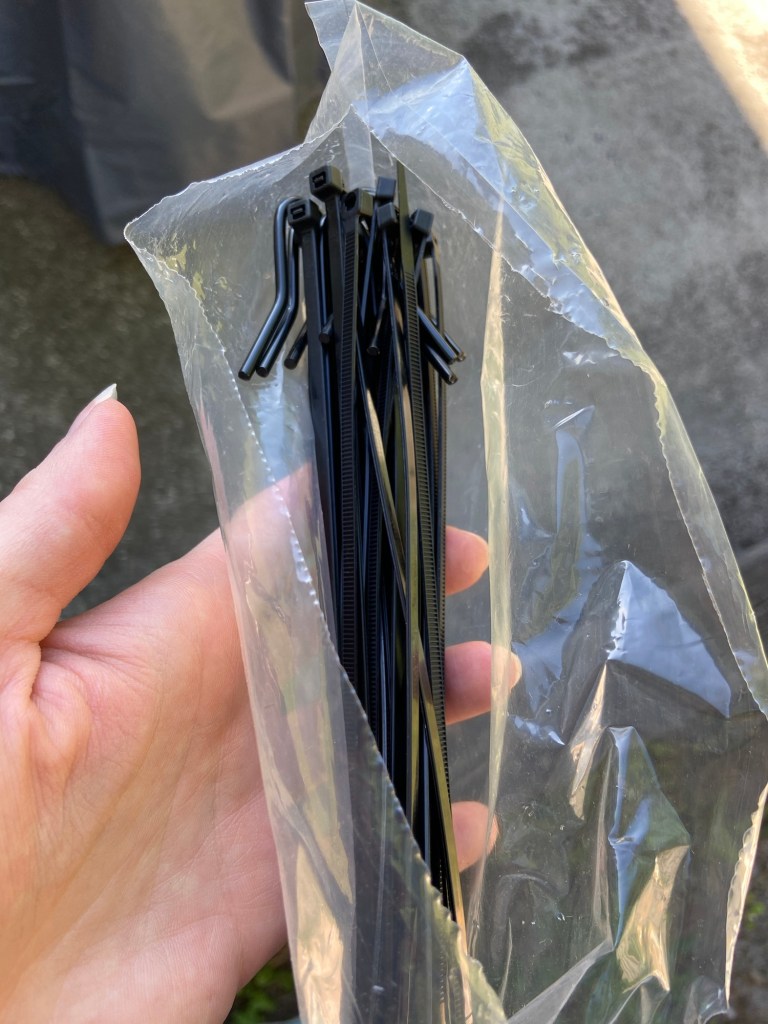
The zip ties and metal stakes are included and you get plenty. I only felt I needed one stake and one zip tie per piece for a single level although I used 2 zip ties per side when I stacked two cages. We’ve had some fairly strong wind and rain since I installed these and I haven’t had any issues with them coming out of the ground or falling over. The biggest benefit of these cages is that they are reusable. You’ll obviously have to replace the zip ties, but since the cages themselves are metal as well as the stakes, I imagine you would be able to use these for many years.
If you’d like to purchase these plant cages, click here: Keten 5 Pack Plant Protector from Animals, 15pcs Metal Mesh to Keep Animals Out, 13.7” Dia x 13.7” H Plant Cages

 Southeastern Native Plants
Leave a comment