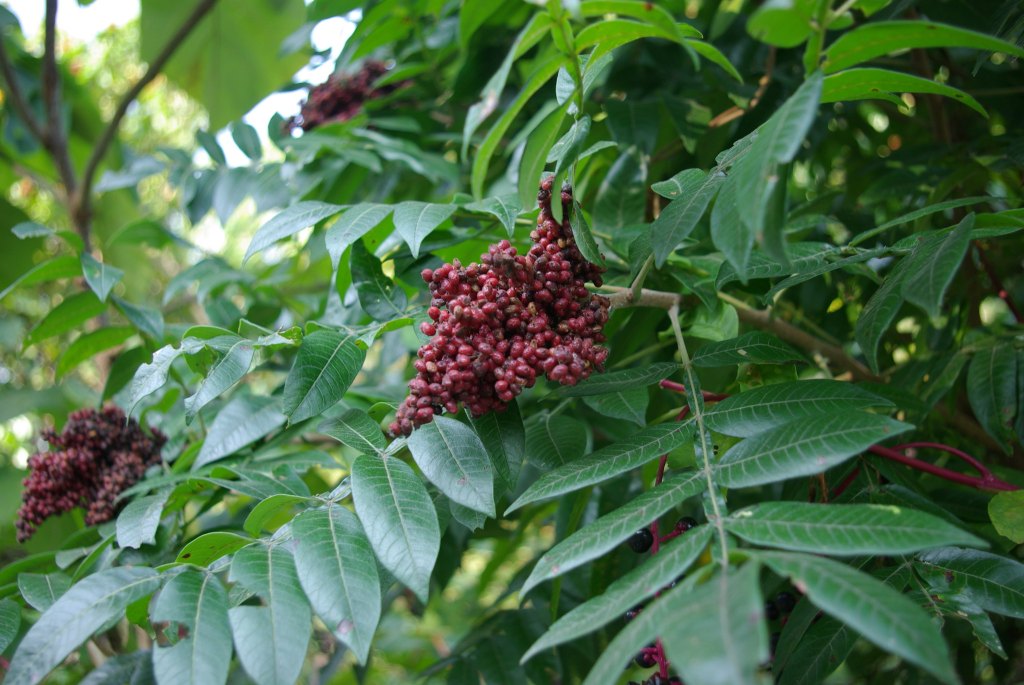
Dwarf Sumac is also known as Winged Sumac due to its unique winged leaf axis (see the photo below). It makes a great ornamental plant due to its bright red leaves in fall and berries that persist into winter. It is drought tolerant and tolerant of most soils, except those that are poorly drained. The flowers are popular with bees and butterflies, and the berries are a good source of food for birds.
Care requirements:
Light requirements: Full Sun-Part Shade
Water requirements: Low
Soil requirements: Dry-Medium, well-drained
Bloom time: July-August
Bloom color: Yellow
Height: 7-15 feet
Width: 10-20 feet
USDA Zone: 4-10
Larval host: Red Banded Hairstreak butterfly, Luna moth
Other notes: Dwarf Sumac spreads vigorously to form a large hedge. Because of this, it is not suited to small areas, unless vigilant removal of suckers is maintained. It is adapted to fire, and fire helps seed germination. The berries are edible, though very tart and astringent; they are often used to make a lemonade-like beverage.
Do you have Dwarf Sumac growing in your garden? Do you have any tips or tricks for growing it you would like to share? Do you know of any Southeastern nurseries that regularly stock it? Let us know in the comments!


 Southeastern Native Plants
Leave a comment