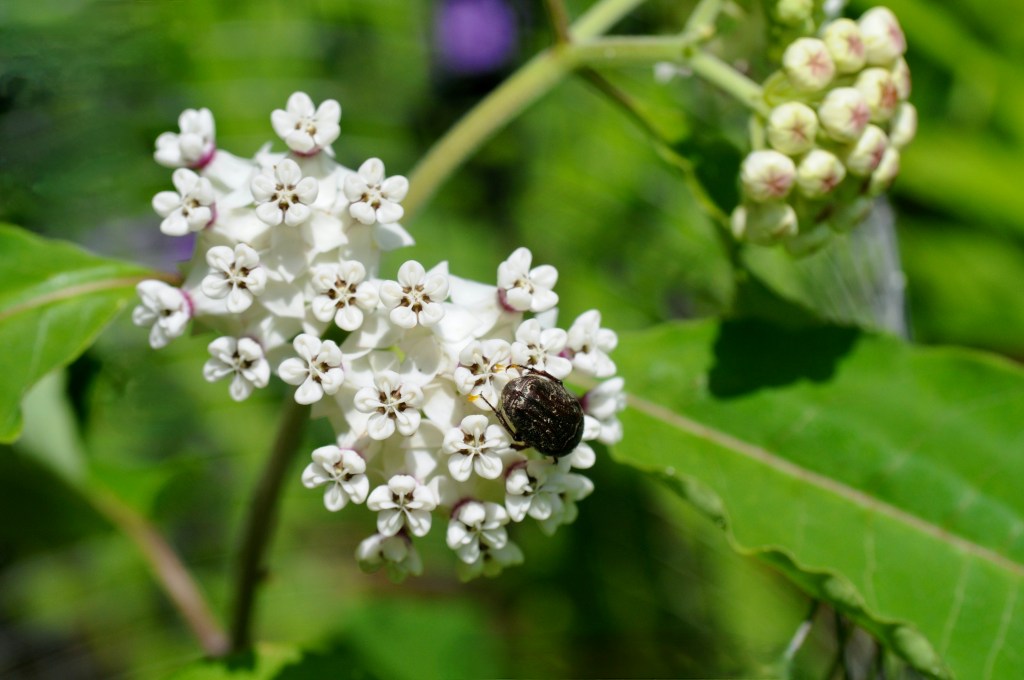
The flowers of this milkweed crowd together in balls, creating a snowball effect that is especially stunning when plants are grouped in masses. This milkweed is not a preferred food source for Monarch caterpillars (in the wild, it tends to grow in low densities, making it harder for Monarchs to find), but it still produces abundant nectar, making it a great pollinator-supporting plant to have in your garden.
Care requirements:
Light requirements: Full Sun-Part Shade
Water requirements: Low-Medium
Soil requirements: Dry-Medium, well-drained
Bloom time: May-July
Bloom color: White
Height: 1-3 feet
Width: 1-3 feet
USDA Zone: 6-9
Larval host: Monarch butterfly
Other notes: While this is not a preferred food source for Monarch caterpillars, they can still be found on it occasionally. It prefers light shade but can also grow in full sun. It is considered rare in the northern parts of its range.
Do you have Redring Milkweed growing in your garden? Do you have any tips or tricks for growing it you would like to share? Do you know of any Southeastern nurseries that regularly stock it? Let us know in the comments!

 Southeastern Native Plants
Leave a comment